“…these lies were psychologically efficient because they corresponded to certain fundamental experiences and even more to certain fundamental cravings. One can say that to some extent fascism has added a new variation to the old art of lying–the most devilish variation–that of lying the truth.”
–Hannah Arendt. “”Approaches to the ‘German Problem.'” (97-98).
Announcements
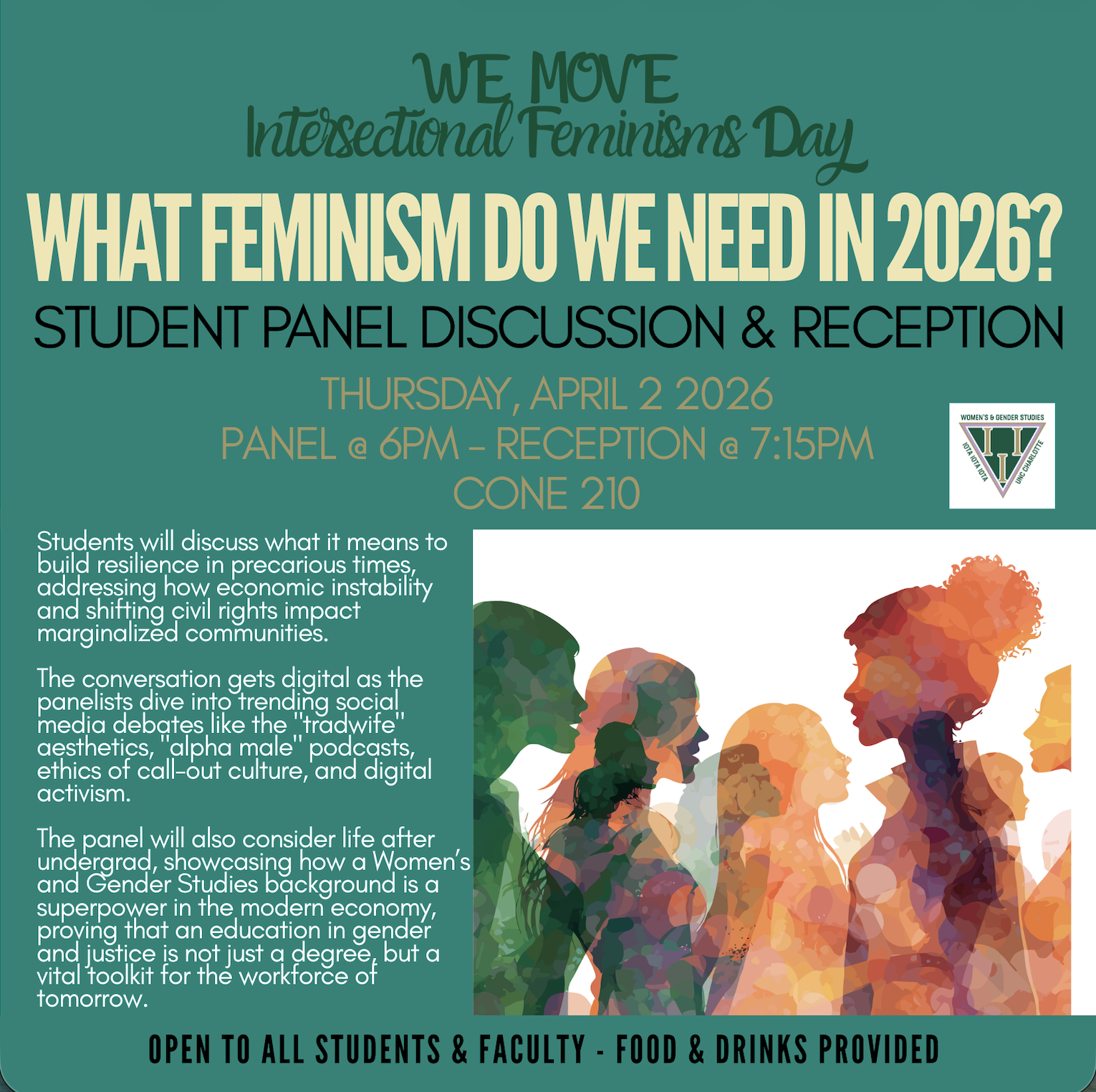
- What Feminism Do We Need in 2026
- Thursday, April 2, 2026 @ 6pm
Plan for the Day
- Hannah Arendt’s “Truth and Politics” (1967)
- Patricia Roberts-Miller’s “Fighting Without Hatred” (2002)
- Rhetoric/al Project (Due 4/29)
- Presentation (5/6)
- Have a topic next week–if not earlier
- Brainstorm a bit
Some Definitions
- agonism: political theory that values conflict and disputation.
- antagonism: an extreme hostility or opposition to something (person, idea, etc.).
- “agonism” seems to welcome conflict even conflicts that can’t be resolved; whereas, “antagonism” implies extreme opposition that has no chance to be resolved, like being diametrically opposed.
- analytic rhetoric: what I refer to when asking you to do a rhetorical analysis–examining the ways a message attempts to persuade (an audience), and you argue and lead to a conclusion.
- ars: skill, craft, or technical ability.
- Not to be confused with arse.
- praxis: practice of an art/theory; practical application of a theory
- topos: derives from “place” in Ancient Greek, and it usually means the ideas we associate with “places” (or entities). Note: in modern usage, topoi has come to mean “commonplaces”
- topos (topoi–pl) can also mean theme in literary studies.
There was a lot of protesting at the turn of the century (circa 2000) in response to Robert J. Connors’s Composition-Rhetoric: Backgrounds, Theory and Pedagogy (1997) where he suggested that there was a change in the late 19th century to “analytic rhetoric—ars stripped of praxis—was a way of avoiding what male college administrators feared: the bringing together of women and the agonistic arena of debate” (53). Let’s analyze other statements and see what might have gotten (perhaps too much) attention:
- “…when women entered the educational equation in colleges, the whole edifice built on ritual contest between teacher and student, and between student and student, came crashing down” (49).
- “Fighting with a woman, to the agonistically charged male, is ignoble on the face of it. To be victorious in such a contest would confer only slightly less shame and loss of face than to be defeated” (49).
I think Arendt’s ideas should have been more prominent at the time (early 2000s), but the field was entering a post-expressive phase devoted to identity and voice. There are more critiques of Connors’s assessment of the history of women and rhetoric, but, especially for rhetoric/composition (not necessarily for communications studies), debate is ignored and even discouraged. Connors also observed instruction in oral presentations and public address were diminished. I’m trying to fix both of those.
Hannah Arendt’s “Truth and Politics”
Not to bury the lead, it’s obvious that Arendt doesn’t find a lot of (actual) truth in politics. As we go over Arendt’s ideas, consider the condition we’re in (and what that means for discourse) when most people know they receive false statements.
The following page numbers refer to the pages from the PDF on Canvas created from The New Yorker‘s webpage.
- p. 2: “…no one, as far as I know, has ever counted truthfulness among the political virtues. Lies have always been regarded as necessary and justifiable tools not only of the politician’s or the demagogue’s but also of the statesman’s trade.”
- p. 2: On JUSTICE
- “‘Fiat iustitia, et pereat mundus‘ (‘Let justice be done and let the world perish’).”
- “Should justice be done if the world’s survival is at stake?”
- p. 2: “…seemingly paradoxical conclusion that lying can very well serve to establish or safeguard the conditions for the search after truth…”
- “And lies, since they are often used as substitutes for more violent means, are apt to be considered relatively harmless tools in the arsenal of political action.”
- In defense of lying: where else in life do lies become “relatively harmless tools” and may even be necessary for stability?
- p. 3: Plato’s cave allegory
- “…Plato offers no explanation of their perverse love of deception and falsehood.”
- p. 4: Truths via Gottfried Wilhelm Leibniz
Some of you may be interested in his theory on pre-established harmony.
- From Bernard E. Harcourt: “Rational truths are the axioms, discoveries, and theories of the mathematical, scientific, and philosophical realm. They are theoretical truths.”
- Factual truths, by contrast, are the facts and events of the world” (Arendt on Theory and Praxis, or Truth and Politics)
- Thoughts on totalitarianism are never far from Arendt’s mind: “The chances of factual truth’s surviving the onslaught of power are very slim indeed; it is always in danger of being maneuvered out of the world not only for a time but, potentially, forever. Facts and events are infinitely more fragile things than axioms, discoveries, theories—even the most wildly speculative ones—produced by the human mind.”
- Theories suppressed have a better chance to “be rediscovered” than “a fact of importance, forgotten or, more likely, lied away.”
- p. 5: “The opposite of a rationally true statement is either error and ignorance, as in the sciences, or illusion and opinion, as in philosophy. Deliberate falsehood, the plain lie, plays its role only in the domain of factual statements”
- “It is the sophist and the ignoramus rather than the liar who occupy Plato’s thought, and where he distinguishes between error and lie…”
- “Only with the rise of Puritan morality, coinciding with the rise of organized science,
whose progress had to be assured on the firm ground of the absolute veracity and reliability of every scientist, were lies considered serious offenses.”
- “…the opposite to truth was mere opinion, which was equated with illusion, and it was this degrading of opinion that gave the conflict its political poignancy; for opinion, and not truth, belongs among the indispensable prerequisites of all power.
- “‘All governments rest on opinion,’ James Madison said, and not even the most
autocratic ruler or tyrant could ever rise to power, let alone keep it, without the support of those who are likeminded.”
- “…the form of ‘dialogue,’ which is the adequate speech for philosophical truth, and in the form of ‘rhetoric,’ by which the demagogue, as we would say today, persuades the multitude.”
- p. 6: Citing James Madison from Federalist #49
- “The reason of man, like man himself, is timid and cautious when left alone, and acquires firmness and confidence in proportion to the number with which it is associated.”
- p. 6:
- Spinoza “…laws prohibiting free thought can only result in “men thinking one thing and saying another,” hence in ‘the corruption of good faith’ and ‘the fostering of. . . perfidy.”
- Kant “…’the external power that deprives man of the freedom to communicate his thoughts publicly, deprives him at the same time of his freedom to think” (italics added)…”
- p. 7: “The shift from rational truth to opinion implies a shift from man in the singular to men in the plural, and this means a shift from a domain where
- “Plato, whose whole political philosophy, including its outspoken tyrannical traits, rests on the conviction that truth can be neither gained nor communicated among the many.”
- “…factual truth, if it happens to oppose a given group’s profit or pleasure, is greeted today with greater hostility than ever before.”
- “The facts I have in mind are publicly known, and yet the same public that knows them can successfully, and often spontaneously, taboo their public discussion and treat them as though they were what they are not—namely, secrets.”
- …
- …
- …
- p. 21: “Persuasion and violence can destroy truth, but they cannot replace it. And this applies to rational or religious truth just as it applies, more obviously, to factual truth.”
- …
- …
Arendt’s “Lying in Politics: Reflections on the Pentagon Papers”
I know I didn’t assign this, but it’s a related work by Arendt on this topic, and essay titled “Lying in Politics.”
- p. 5: “…the deliberate denial of factual truth–the ability to lie–and the capacity to change facts–the ability to act–are interconnected; they owe their existence to the same source: imagination.”
- p. 6: “when we talk about lying, and especially about lying among acting men….The deliberate falsehood deals with contingent facts; that is, with matters that carry no inherent truth, within themselves, no necessity to be as they are. Factual truths are never compellingly true.”
- “…no factual statement can ever be beyond doubt–as secure and shielded against attack as, for instance, the statement that two and two make four.”
- pp. 6-7: “Lies are often much more plausible, more appealing to reason, than reality, since the liar has the great advantage of knowing beforehand what the audience wishes or expects to hear. He has prepared his story for public consumption with a careful eye to making it credible, whereas reality has the disconcerting habit of confronting us with the unexpected, for which we were not prepared.
And it’s obvious why studying rhetoric is important. In fact, I try to coach the debate team to look for the contradictions in any system, and having Arendt in mind is important. Below are some passages from John S. Nelson’s Arendt critique shortly after her death that could be valuable:
- p. 271: “…Arendt’s treatment of the problematic politics and truth manifests what she herself regarded a mark of great philosophy–fundamental and flagrant contradiction.”
- pp. 272-273: “Ideology and terror were for Arendt the two distinctive characteristics of totalitarianism as a form of government….Arendt worried about the hostility toward freedom evidenced by the coercive logic of ideology.”
- p. 273: “Total terror, which breaks down the possibility of speech and cooperation, thus proves hostile to the intersubjectively sustained world of politics–the only world we can have, or at least have in common.”
- p. 274: “Totalitarian ideology as Arendt saw it, is offered as a comprehensive substitute for reality. This ‘big lie’ goes beyond hostility to particular facts; it works toward replacement, and thus destruction, of the full fabric of factuality by an invented pseudo-reality.”
- p. 276: “Truth is besieged because, increasingly, we seem not to want to face it recognize it, accept it, or believe it. But truth is threatened as well, A insisted, because we cannot believe it. Ever more often, truth is far too outrageous to be believable.”
Patricia Roberts-Miller’s “Fighting Without Hatred”
Consensus is still all the rage in academia, but I appreciate Robert-Miller’s attempt to ask: “What, then, is the case for agonism?” (586). Academics within fields do still argue–sometimes intensely–but argument is overwhelmingly (not universally) seen as undesirable and extreme, and the “good” person aims for moderation and the middle-of-the road.
- p. 586: From Lisa K. Adams’s Dealing with Arguments (1997)–“Arguing doesn’t usually change the way another person thinks. Most arguments leave people feeling even angrier than before” (Adams 6).
- p. 587: “…replacing much of our dislike of conflict with a mistrust of consensus.”
- p. 587: “…obsession with one’s own self and the particularities of one’s life prevents one from engaging in conscious, deliberate, collective action.”
- “This fragmented world in which many people live simultaneously and even similarly but not exactly together is what Arendt calls the ‘social.'”
- …
- p. 588: “…we do not consciously choose to engage in life’s activities; we drift into them, or we do them out of a desire to conform.”
- “In a totalitarian system, however, everyone is simply doing his or her job; there never seems to be anyone who can explain, defend, and change the policies. Thus, it is as Arendt says, rule by nobody.”
- …
- p. 589: “For Arendt, the common world is up for argument because it is created by argument, and part of what gets created is our own identity.”
- “…the most troubling aspects of agonism: the possibility that it is fundamentally elitist.”
- I’m not troubled by that, but it’s worth thinking through the bigger implications
- From my SEACS Presentation last weekend
Richard Hofstadter, although he thinks intellectuals deserve to be seen as experts, points out how the elitism of intellectuals is a privileged position” - “[The intellectual] is the object of resentment because of an improvement, not a decline, in his fortunes….Intellect is resented as a form of power or privilege” (34)
- “The common strain that binds together the attitudes and ideas which I call anti-intellectual is a resentment and suspicion of the life of the mind and of those who are considered to represent it” (7).
- p. 591: “Totalitarianism is closely connected to bureaucracy….It is the triumph of the social.”
- p. 592: “We create the social through negligence.”
- We reward social behavior.
- “…totalitarian systems result not so much from the Hitlers or Stalins as from the bureaucrats who may or may not agree with the established ideology but who enforce the rules for no stronger motive than a desire to avoid trouble with their superiors.”
- p. 593: “…good thinking requires that one hear the arguments of other people.”
- “Thinking is, in this view, necessarily public discourse: critical thinking is possible ‘only where the standpoints of all others are open to inspection’ (Lectures 43).”
- …
- .p. 594: “Good thinking depends upon good public argument, and good public argument depends upon access to facts: ‘Freedom of opinion is a farce unless factual information is guaranteed’ (238).”
- Compare to Asimov’s “A Cult of Ignorance”
- p. 595: Agonisms
- “…polemical agonism: it puts less emphasis on gaining assent…”
- “In persuasive agonism, one plays down conflict and moves through reasons to try to persuade one’ s audience.”
- “In polemical agonism, however, one’s intention is not necessarily to prove one’s case, but to make public one’ s thought in order to test it.”
Next Class
Next week, we’ll discuss Jacques Derrida’s Positions and two short things by Roland Barthes. Your Rhetoric/al Project is due in one month–April 29th.
Works Cited
Arendt, Hannah. “Approaches to the ‘German Problem.'” Partisan Review, vol. 12, 1945, 93-106.
Arendt, Hannah. “Lying in Politics.” Crises of the Republic. Harvest, 1972, 3-47.
Connors, Robert J. Composition-Rhetoric: Backgrounds, Theory and Pedagogy. Pittsburgh: U of Pittsburgh P, 1997.
Harcourt, Bernard E. “Introduction to 1/13: On Theory and Praxis, and Truth, Politics, and Power.” Columbia Center for Contemporary Critical Thought. 8 Sept 2018. https://blogs.law.columbia.edu/praxis1313/bernard-e-harcourt-introduction-to-1-13-on-theory-and-praxis-and-truth-politics-and-power/?cn-reloaded=1
Hofstadter, Richard. Anti-intellectualism in American Life. Knopf, 1963.