My scholarly work ranges from traditional peer-reviewed articles to community-based research products. I list all of these together since all are part of my overall academic portfolio. When not otherwise noted, the work in my list is published in a technical scientific journal and went through the formal peer-review process. This means that prior to final publication, the work was reviewed by 1-4 experts in the field, and a journal editor who is usually a subject expert as well. My co-authors and I then are obligated to respond to reviewer comments, and this process is intended to (and usually does) produce a better contribution to the scientific literature. The review-reply process can take months or sometimes years.
Learn more about my peer-reviewed research via my ResearchGate profile, ORCID profile, or Web of Science profile, and/or clicking on links below. I have been working on community-based research most directly since 2022, and you can learn about that work by clicking on links below.
*****************************************************************************
40. Chapter title “Community geography at an urban research university”, Colleen Hammelman, Fushcia-Ann Hoover, Katherine Idziorek, Brian Magi, Michelle Zuñiga, Tuyen Truong, for an edited volume called Community Geography by Jerry Shannon (UGA), Danny Block (Chicago State), Colleen Hammelman (UNC Charlotte), submitted Spring 2025, in final revision December 2025.
39. not peer-reviewed “E-I-E-I-O No!” Zooniverse Project; Collaborators are from North Carolina Environmental Justice Network, CleanAIRE NC, the Center for a Livable Future at John Hopkins University, Rural Empowerment Association for Community Help, the Participatory Sciences Lab at North Carolina State University, the Water Resources Center at East Carolina University, and UNC Charlotte. Project objective is for Zooniverse participants to use remote sensing imagery from North Carolina to locate poultry and swine concentrated animal feeding operations. This Project went live in July 2026. Visit the Crowd-Sourced Project here.
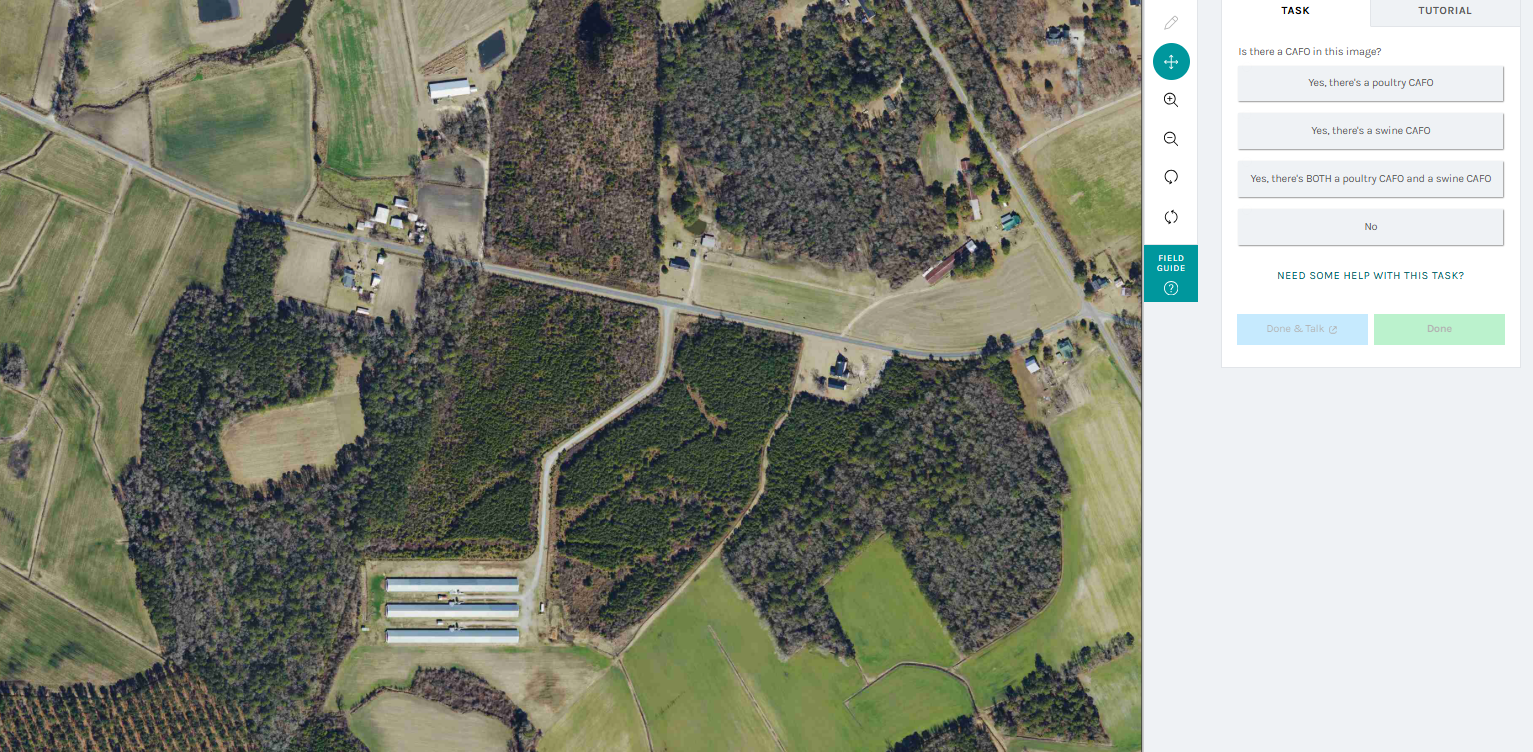
Above is what the E-I-E-I-O No! Zooniverse Project might look like if you were to join the crowd-sourcing effort to decide whether you see a poultry or swine farm in the image. There’s guidance to help you on the Zooniverse Project page and lots of participants already! We hope to collect the data and compile it in a way that is useful for residents of North Carolina.
38. “Fostering community-engaged action research through bolstering webs of relationships”, Colleen Hammelman, Katherine Idziorek, Michelle Zuñiga, Brian Magi, Hannah Partridge, Erick Suarez Salazar, Dylan Turner, Journal of Higher Education Outreach and Engagement, Vol. 30 No. 2 (2026): Summer 2026. Open-Access Article available here.
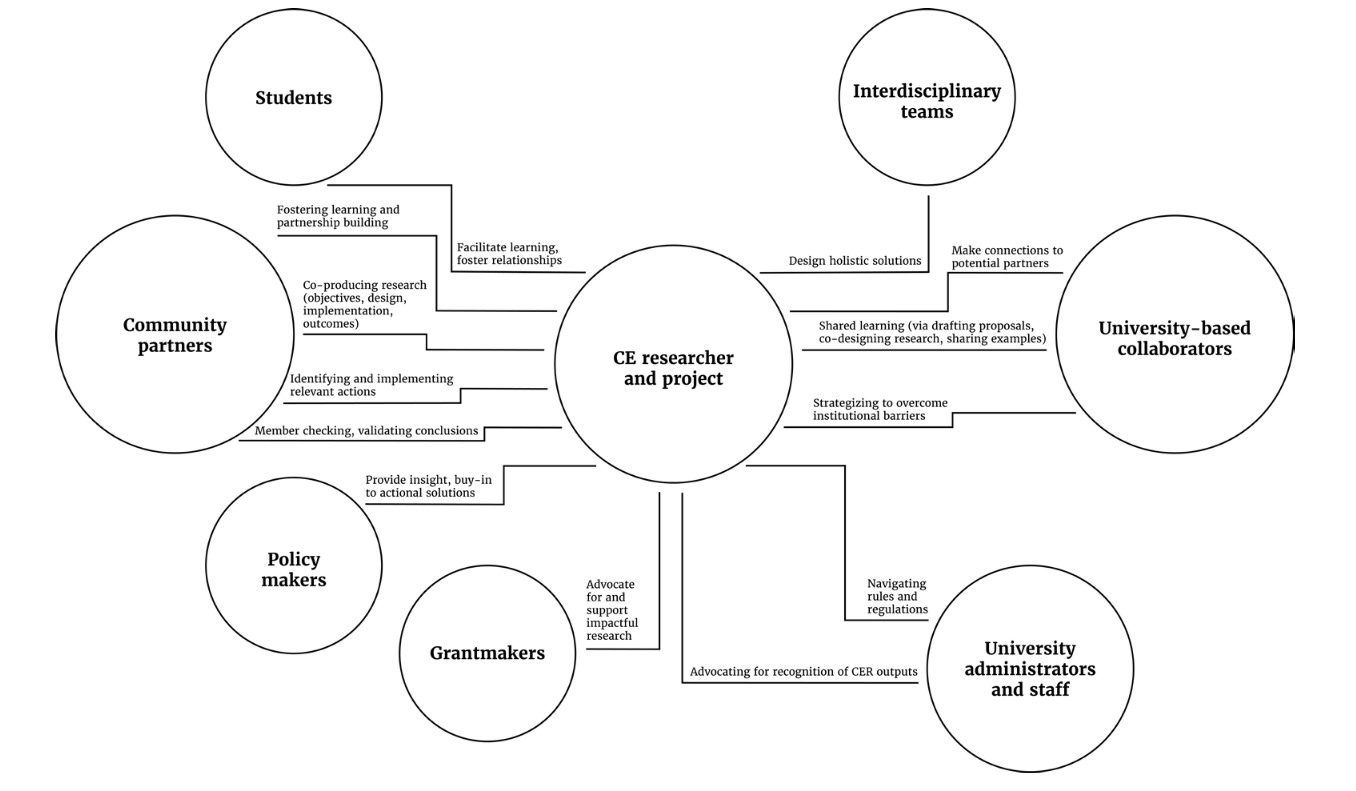
Figure above is from Hammelman et al. (2026) with a key quote from our work being “Through our collective reflections, several participants noted the ways in which it can be difficult to translate [Community-Engaged Research] outputs … into the metrics reviewed by hiring, tenure, and promotion committees.”
37. not peer-reviewed Content Author for CleanAIRE Academy Learning Management System Air Quality 101, public release was October 2025. I worked on this digital resource with CleanAIRE NC Education Program Manager to closely review content for technical clarity and accuracy relative to air pollution, air quality, and the federal regulations related to the Clean Air Act.
36. Technical peer-review B.I. Magi, “Sampson County Air Monitoring Network Quality Assurance Project Plan”, September 2025. A Quality Assurance Project Plan (QAPP) is a required prerequisite for all EPA funded research grants, and must be closely (line by line) reviewed by multiple EPA PhD scientists to clear the grant team to proceed with the proposed research. This QAPP was for an EPA funded project “The Sampson County Air Monitoring Network”, with non-profit CleanAIRE NC as the funded group. I am the “QAPP Primary Author”, so contact me for more information about the QAPP.
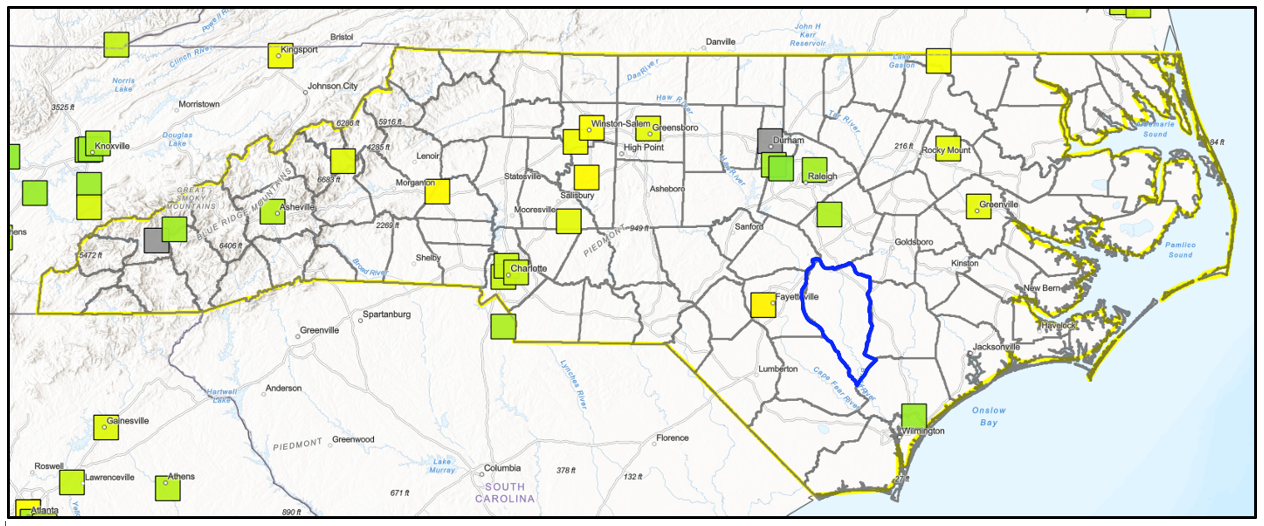
Figure is from the Sampson County QAPP and highlights how low-cost PM2.5 sensors can be deployed in places that do not currently have any far more expensive regulatory PM2.5 monitors (marked by squares on the map of North Carolina). Sampson County is outlined in blue.”
35. not peer-reviewed Content Author for the CleanAIRE NC AirKeeper Dashboard manuals and guides, in collaboration with A. Strawderman, publicly released in June 2025. Manuals and guides are linked publicly at the AirKeeper Dashboard Help Center and include “About the AirKeeper Dashboard”, “Navigating the AirKeeper Dashboard”, “Using the Dashboard Tools”, “Location Report Help”, and “Glossary of Key Terms”.
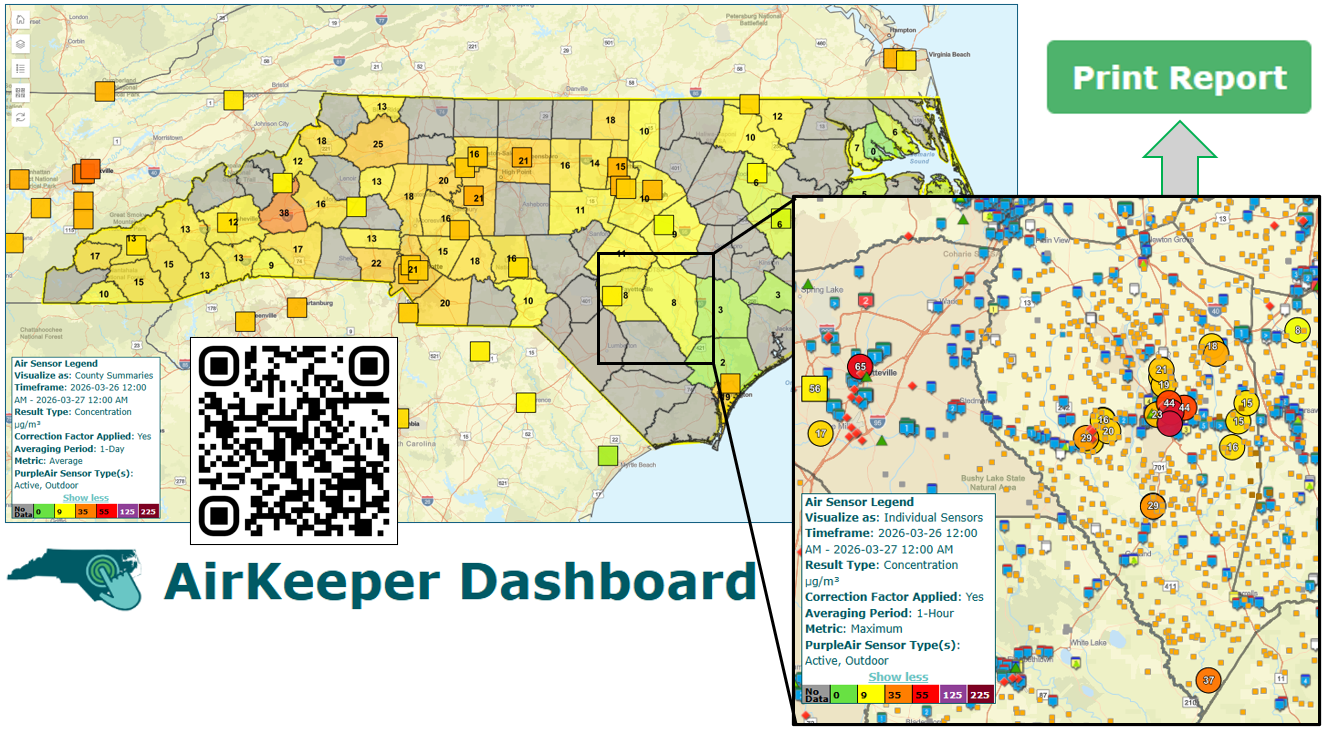
A glimpse of what the CleanAIRE NC AirKeeper Dashboard looks like. See the links immediately above and below to explore this North Carolina webtool yourself, or send me an email if you have questions.
34. not peer-reviewed Public release of the CleanAIRE NC AirKeeper Dashboard (AKD), June 2025. The CleanAIRE NC AirKeeper Dashboard is a digital standalone product that is free to access, and brings air pollution data together with geographic data in a North Carolina based web mapping system for anyone to explore interconnections.
33. not peer-reviewed City of Charlotte Strategic Energy Action Plan+: A Roadmap for Sustainability (SEAP+), finalized by the City of Charlotte Office of Sustainability and Resilience (OSR), led by Sarah Hazel, Dr. Robyn Byers, Heather Bolick, and Aaron Tauber, adopted May 2025. The SEAP+ is a guidance and urban planning document for Charlotte that is presented by city staff, informed by outside expertise, and approved by elected officials, and aims to grow our city in a way that is sustainable. I was on the SEAP+ Technical Advisory Committee starting in Fall 2024 and extending into Spring 2025 as this major update to the original 2018 SEAP was being prepared. I provided direct input (meetings and emails) to the SEAP+ in terms of language and concepts.
32. not peer-reviewed Joseph Ilardi and Katie O’Toole, 2023. Use Case: Citizen Science for Hyperlocal Data Collection – Clean Air Carolina and the AirKeepers, Published by the Data Foundation; Note: This is “gray” literature – work that is not externally peer-reviewed. Along with others from CleanAIRE NC, I was consulted/interviewed multiple times since June 2022 by the Data Foundation report authors for input to the report based on my long background with Clean Air Carolina’s Citizen Science Program (now CleanAIRE NC Community Science Program), [PDF, Web, and also make sure to visit the ESRI Storymap called “Clearing The Air in the Historic West End: Citizen Science and Environmental Justice in Charlotte, North Carolina” by Calvin Cupini (former CitSci Program Manager at CleanAIRE NC) since the Data Foundation report refers to it.]
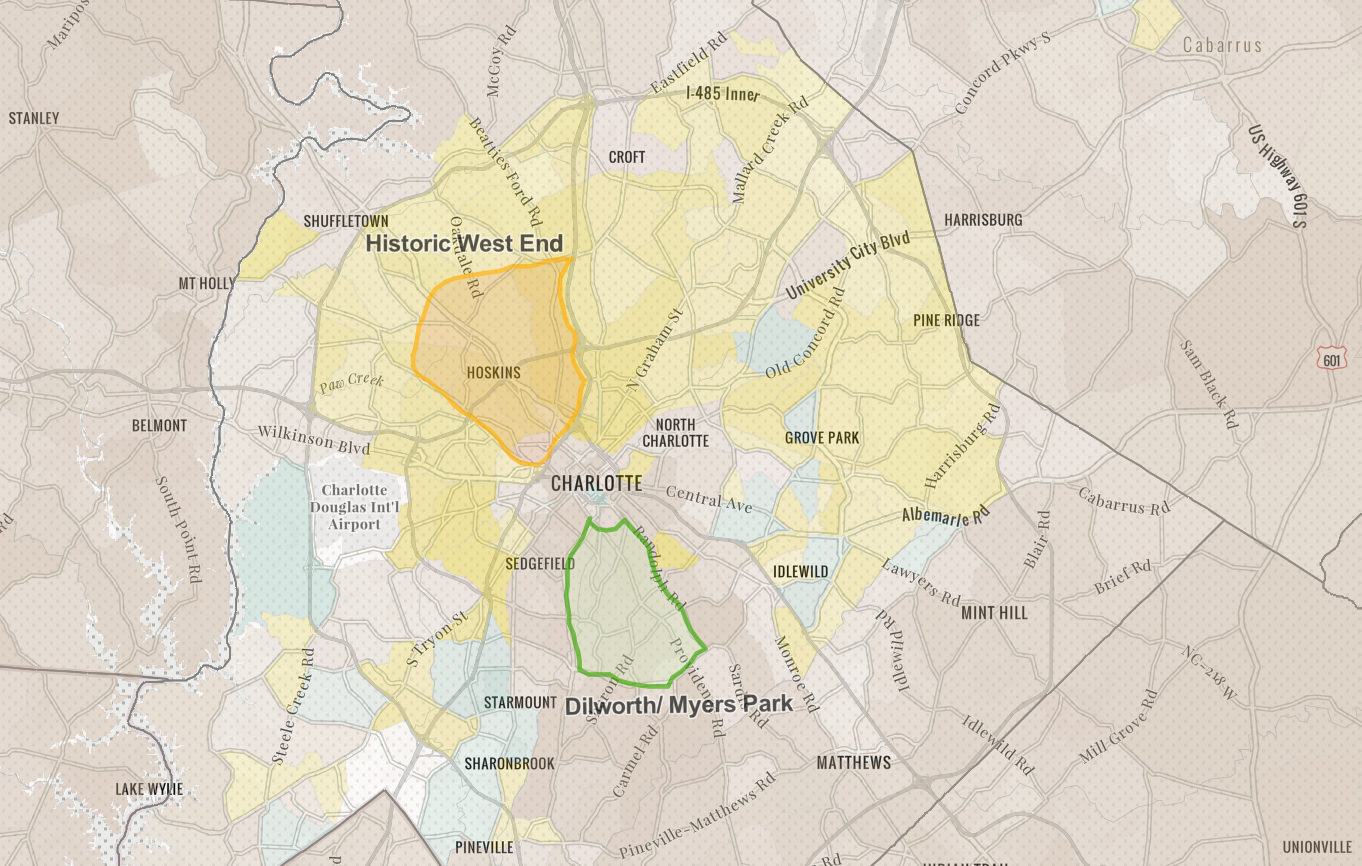
Figure above is from the CleanAIRE NC ESRI Storymap “Clearing The Air in the Historic West End: Citizen Science and Environmental Justice in Charlotte, North Carolina” studying the impacts of redlining on air pollution exposure disparities in the Queen City.
31. Krueger, E. S., Levi, M. R., Achieng, K. O., Bolten, J. D., Carlson, J. D., Coops, N. C., Holden, Z. A., Magi, B. I., Rigden, A. J. & Ochsner, T. E. 2022. Using soil moisture information to better understand and predict wildfire danger: A review of recent developments and outstanding questions. International Journal of Wildland Fire, https://doi.org/10.1071/WF22056, [Open Access]
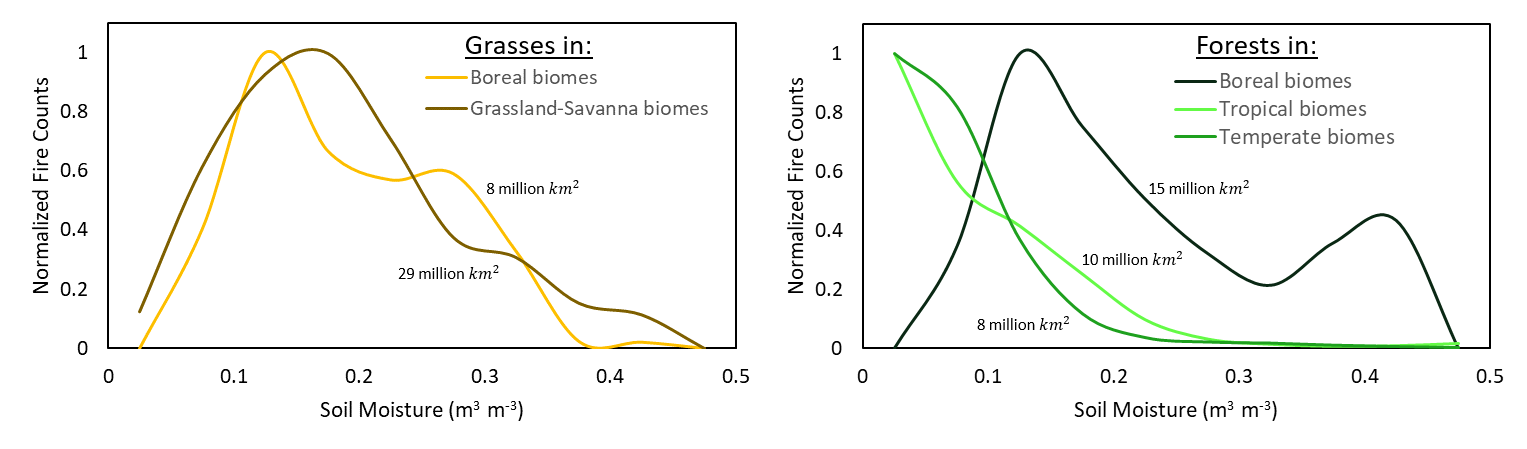
Figure above was my contribution to Krueger et al 2022 (International Journal of Wildland Fire) and drawn from results/analysis detailed in my former PhD student’s paper (Schaefer and Magi 2019) where we found that the occurrence of fires in boreal forests, which have a shallower rooting depth than forests in other biomes (Fan et al. 2017), relates to soil moisture availability in a way that is similar to grasslands, which also have shallow root depths. This broadly suggests that soil moisture has some statistical power in predicting biome-scale fire occurrence. The numbers are the amount of land area on Earth of each land cover type in each biome.
30. Webb, E.J. and B. I. Magi, 2022: The Ensemble Oceanic Nino Index, International Journal of Climatology, https://doi.org/10.1002/joc.7535, [Open Access]
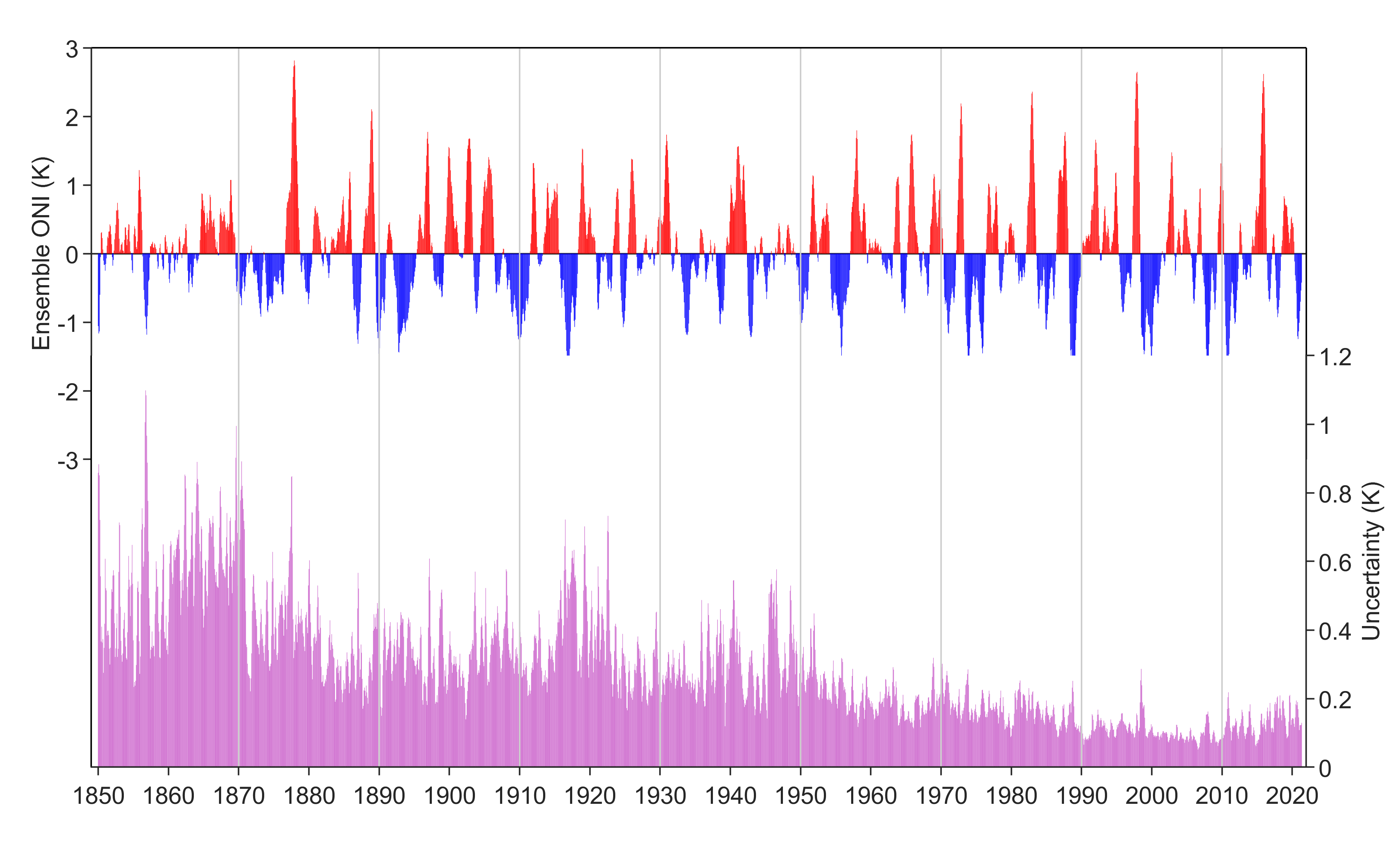
Figure from Webb and Magi 2022 (International Journal of Climatology) showing the state of the tropical Pacific Nino3.4 region and the uncertainty, both of which we calculated using an ensemble of 32 input datasets.
29. not peer-reviewed Oommen, R., Cansler, J., Enoch, S., Faught, K., Greene, D., Mendenhall, S., Perez, H., Richman, T., Tisano, J., Sellers, J., Blotnick, J., Sharova, M., Babao, G., Cupini, C. & Magi, B. 2021. Clean Air Carolina PurpleAir Sensor Network Assessment, 2017-2020. Note: This is “gray” literature – work that is not externally peer-reviewed. I was a contributing scientific and technical reviewer/editor for the work led by the Eastern Research Group in a contract with CleanAIRE NC, [PDF Summary, Full Report available on request]
28. not peer-reviewed Mike Dolan Fliss (lead author NC DPH), Calvin Cupini (Clean Air Carolina), Sarav Arunachalam (UNC CH), Radhika Dhingra (UNC CH), Lawrence Engel (UNC CH), Chris Heaney (Johns Hopkins), B. Magi (UNC Charlotte), Sarah Rhodes (UNC CH), Ann Maria Rule (Johns Hopkins), Sacoby Wilson (U Maryland), Courtney Woods (UNC CH), William Vizuete (UNC CH), 2020: Public Comment on NC DEQ Industrial Hog Operation Air Quality Monitoring Study: Scientific Review, Note: This was a community/academic response to a NC DEQ Title XI settlement called the “Duplin County Air Monitoring Study” (DCAMS) which was tasked with the following: “As part of a Settlement Agreement, the Department of Environmental Quality agreed to design and implement a temporary ambient air quality monitoring study in and around Duplin County, North Carolina. The Division of Air Quality is tasked with determining the degree of air contamination and air pollution in and around this area of three pollutants, particulate matter (PM2.5), hydrogen sulfide (H2S), and ammonia (NH3).” PDF of the Community Response led by Mike Dolan Fliss and PDF of NC DEQ Draft Report (December 2019)that we responded to and PDF of NC DEQ Final Report (May 2020) that considered community responses
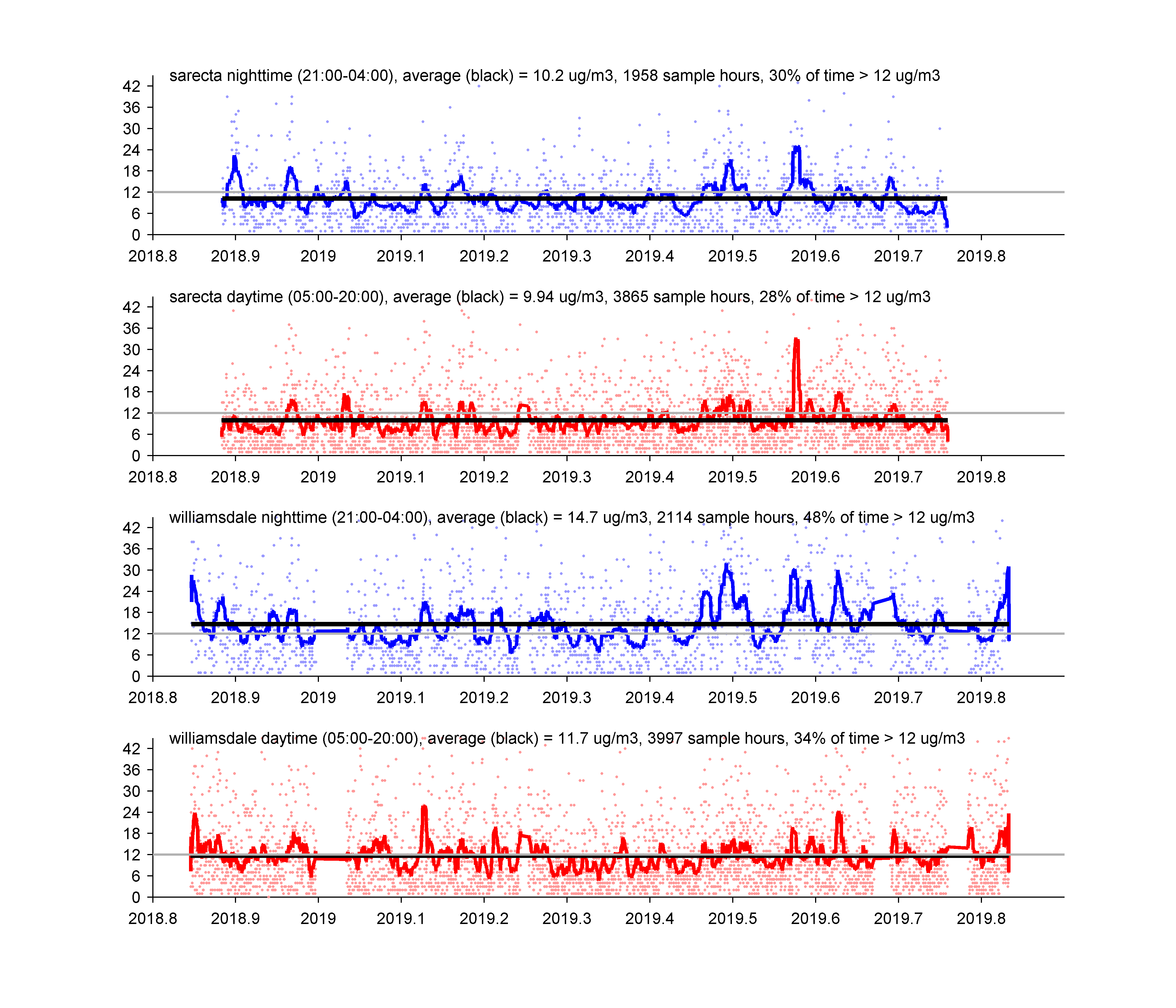
Figure that I made using DEQ reported data from Duplin County NC. This re-analysis was part of our 12-scientist Community Response to the DCAMS report. Our analysis shows that there was a distinct day/night difference in average PM2.5 concentration, and PM2.5 > 12 ug/m3 over 30% of the time. DCAMS did not clearly eliminate the possibility that the elevated PM2.5 was associated with spray times on farms. This led us to question whether the lived-experience near hog farms in Duplin was captured by the DEQ study design. Other details are in the report linked above (under reference 28), but we need Purple Air monitors (and more) near the fenceline.
27. Eppes, M. C., B. Magi, J. Scheff, K. Warren, S. Ching, and T. Feng, 2020: Warmer, Wetter Climates Accelerate Mechanical Weathering in Field Data, Independent of Stress-Loading. Geophysical Research Letters, 47, 2020GL089062 http://dx.doi.org/10.1029/2020GL089062 [HTML, PDF]
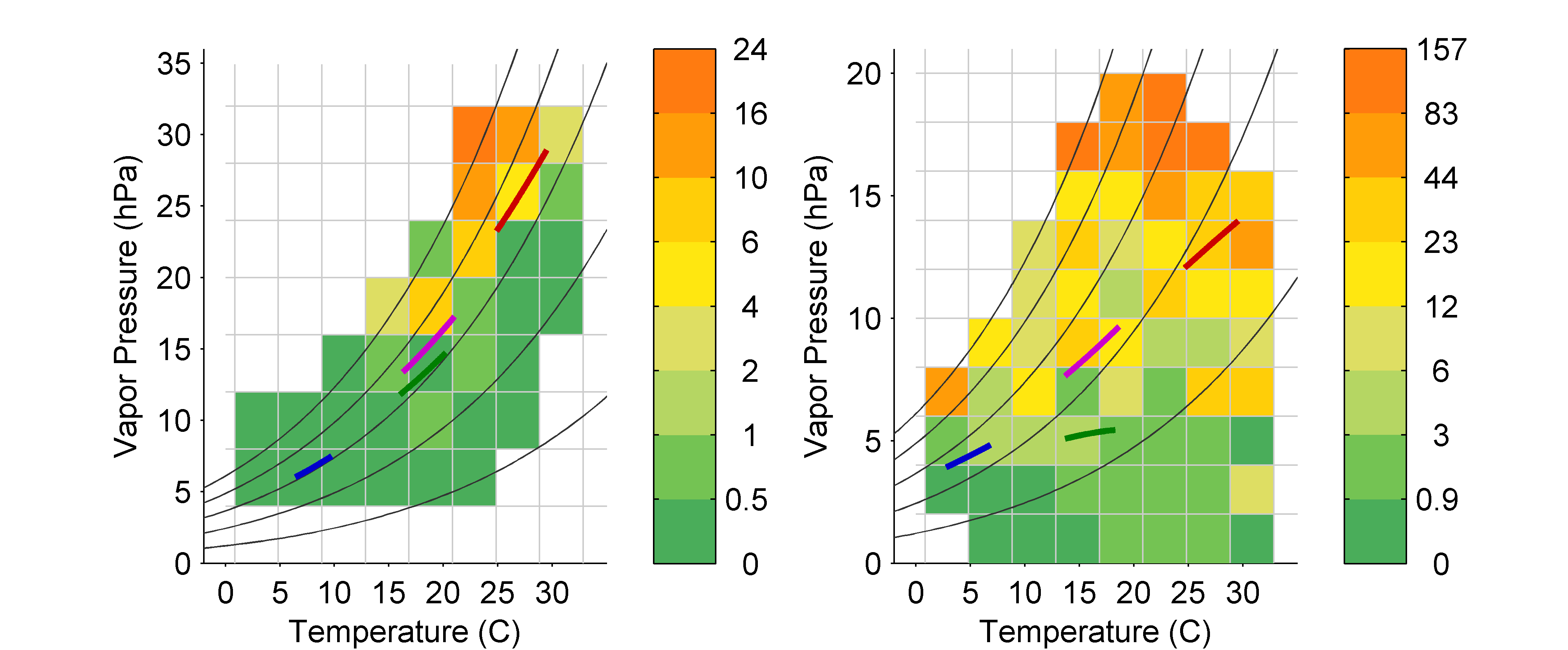
Figure from Eppes et al 2020 (Geophysical Research Letters) showing how the mechanical cracking rate increases with increasing vapor pressure, even when we control our analysis for mechanical stress. The black lines are constant RH, and the colorful lines are the changes expected by end of the century.
26. Schaefer, A. J., and B. I. Magi, 2019: Land-Cover Dependent Relationships between Fire and Soil Moisture. Fire, 2, 55. [Open Access]
25. Li, F., M. Val Martin, M. O. Andreae, A. Arneth, S. Hantson, J. W. Kaiser, G. Lasslop, C. Yue, D. Bachelet, M. Forrest, E. Kluzek, X. Liu, S. Mangeon, J. R. Melton, D. S. Ward, A. Darmenov, T. Hickler, C. Ichoku, B. I. Magi, S. Sitch, G. R. van der Werf, C. Wiedinmyer, and S. S. Rabin, 2019: Historical (1700–2012) global multi-model estimates of the fire emissions from the Fire Modeling Intercomparison Project (FireMIP), 2019. Atmospheric Chemistry and Physics, 19, 12545-12567. [Open Access]
24. B. Magi, C. Cupini, J. Francis, M. Green, and C. Hauser, 2019, Evaluation of PM2.5 measured in an urban setting using a low-cost optical particle counter and a Federal Equivalent Method Beta Attenuation Monitor, Aerosol Science and Technology, 1-13. [HTML, PDF]
23. Coughlan, M., B. Magi, and K. Derr, 2018: A Global Analysis of Hunter-Gatherers, Broadcast Fire Use, and Lightning-Fire-Prone Landscapes, Fire, 1, 41 [Open Access].
22. Quaternary International (Elsevier) Special Issue on The Human-Climate-Fire Nexus: Hawthorne, D., C. J. Courtney Mustaphi, J. C. Aleman, O. Blarquez, D. Colombaroli, A.-L. Daniau, J. R. Marlon, M. Power, B. Vannière, Y. Han, S. Hantson, N. Kehrwald, B. Magi, X. Yue, C. Carcaillet, R. Marchant, A. Ogunkoya, E. N. Githumbi, and R. M. Muriuki, 2018: Global Modern Charcoal Dataset (GMCD): A tool for exploring proxy-fire linkages and spatial patterns of biomass burning. Quaternary International, 488, 3-17. [HTML, PDF]
21. Rabin, S. S., D. S. Ward, S. L. Malyshev, B. I. Magi, E. Shevliakova, and S. W. Pacala, 2018: A fire model with distinct crop, pasture, and non-agricultural burning: use of new data and a model-fitting algorithm for FINAL.1. Geoscientific Model Development, 11, 815-842, [Open Access]
20. van Marle, M. J. E., S. Kloster, B. I. Magi, J. R. Marlon, A. L. Daniau, R. D. Field, A. Arneth, M. Forrest, S. Hantson, N. M. Kehrwald, W. Knorr, G. Lasslop, F. Li, S. Mangeon, C. Yue, J. W. Kaiser, and G. R. van der Werf, 2017: Historic global biomass burning emissions for CMIP6 (BB4CMIP) based on merging satellite observations with proxies and fire models (1750–2015), Geoscientific Model Development, 10, 3329-3357 [Open Access, description of dataset online]
Dataset DOI: van Marle, Margreet J.E.; Kloster, Silvia; Magi, Brian I.; Marlon, Jennifer R.; Daniau, Anne-Laure; Field, Robert D.; Arneth, Almut; Forrest, Matthew; Hantson, Stijn; Kehrwald, Natalie M.; Knorr, Wolfgang; Lasslop, Gitta; Li, Fang; Mangeon, Stéphane; Yue, Chao; Kaiser, Johannes W.; van der Werf, Guido R. (2016). Biomass Burning emissions for CMIP6 (v1.2). Version YYYYMMDD[1].Earth System Grid Federation. [https://doi.org/10.22033/ESGF/input4MIPs.1117]
19. Magi, B. I., T. Winesett, and D. J. Cecil, 2016: Estimating Lightning from Microwave Remote Sensing Data, Journal of Applied Meteorology and Climatology, 55, 2021-2036, [Journal, PDF]
18. Hantson, S., S. Kloster, M. Coughlan, A.-L. Daniau, B. Vannière, T. Brücher, N. Kehrwald, and B. I. Magi (2016), Fire in the Earth System: Bridging Data and Modeling Research, Bulletin of the American Meteorological Society, 97(6), 1069-1072 [Open Access]
17. Marlon, J. R., R. Kelly, A. Daniau, B. Vanniere, M. J. Power, P. Bartlein, P. Higuera, O. Blarquez, S. Brewer, T. Bruecher, A. Feurdean, G. G. Romera, V. Iglesias, S. Y. Maezumi, B. Magi, C. J. C. Mustaphi, T. Zhihai (2016), Reconstructions of biomass burning from sediment charcoal records to improve data-model comparisons, Biogeosciences, 13, 3225-3244, 10.5194/bg-13-3225-2016 [Open Access]
16. Kehrwald, N. M., J. Aleman, M. Coughlan, C. Courtney-Mustaphi, E. Githumbi, B. Magi, J. Marlon, and M. J. Power (2016), One thousand years of fires: Integrating proxy and model data, Frontiers of Biogeography, 8, 2016 [Abstract, PDF]
15. Eppes, M. C., B. Magi, B. Hallet, E. Delmelle, P. Mackenzie-Helnwein, K. Warren, and S. Swami (2016), Deciphering the role of solar-induced thermal stresses in rock weathering, Geological Society of America Bulletin, 128, 1315-1338 [Abstract, PDF]
14. Rabin, S. S., Magi, B. I., Shevliakova, E., and Pacala, S. W. (2015), Quantifying regional, time-varying effects of cropland and pasture on vegetation fire, Biogeosciences, 12, 6591-6604, doi:10.5194/bg-12-6591-2015 [Open Access]
13. Magi, B. I. (2015), Global Lightning Paramterization from CMIP5 Climate Model Output, Journal of Atmospheric and Oceanic Technology, 32, 434–452, doi:10.1175/JTECH-D-13-00261.1 [HTML, PDF]
12. Magi, B. I., Rabin, S., Shevliakova, E., and Pacala, S (2012), Separating agricultural and non-agricultural fire seasonality at regional scales, Biogeosciences, 9, 3003-3012, doi:10.5194/bg-9-3003-2012. [Open Access]
11. Donner, L.J, B.L. Wyman, R.S. Hemler, L.W. Horowitz, Y. Ming, M. Zhao, J.C. Golaz, P. Ginoux, S.J. Lin, M.D. Schwarzkopf, …, B.I. Magi, …, et al. (2011), The Dynamical Core, Physical Parameterizations, and Basic Simulation Characteristics of the Atmospheric Component of the GFDL Global Coupled Model CM3, J. Climate, 24, 3484-3519. [PDF] [HTML]
10. Magi, B.I. (2009), Chemical apportionment of southern African aerosol mass and optical depth, Atmos. Chem. Phys., 9, 7643-7655. [Open Access]; Note Corrigendum published [PDF, HTML]
9. Magi, B.I., P. Ginoux, Y. Ming, and V. Ramaswamy (2009), Evaluation of tropical and extratropical Southern Hemisphere African aerosol properties simulated by a climate model, J. Geophys. Res., 114, D14204, doi:10.1029/2008JD011128. [PDF, HTML]
8. Magi, B.I., Q. Fu, J. Redemann, and B. Schmid (2008), Using aircraft measurements to estimate the magnitude and uncertainty of the shortwave direct radiative forcing of southern African biomass burning aerosol, J. Geophys. Res., 113, D05213, doi:10.1029/2007JD009258. [PDF, HTML]
7. Magi, B., M. Coughlan, A. Edwards, M. Hurteau, A. Petty, F. Seijo, and C. Wiedimyer (2008), Meeting Report from AIMES (Analysis, Integration and Modeling of the Earth System) Young Scholar’s Network Workshop on Cultural Uses and Impacts of Fire: Past, Present, and Future, Eos, 89(40), doi:10.1029/2008ES002414. [PDF, HTML]
6. Magi, B.I., Q. Fu, and J. Redemann (2007), A methodology to retrieve self-consistent aerosol optical properties using common aircraft measurements, Journal of Geophysical Research, 112, D24S12, doi:10.1029/2006JD008312. [PDF, HTML]
5. Magi, B.I., P.V. Hobbs, T.W. Kirchstetter, T. Novakov, D.A. Hegg, S. Gao, J. Redemann, and B. Schmid (2005), Aerosol Properties and Chemical Apportionment of Aerosol Optical Depth at Locations off the United States East Coast in July and August 2001, Journal of the Atmospheric Sciences, 62(4), 919-933, doi:10.1175/JAS3263.1. [PDF, HTML]
4. Magi, B.I., P.V. Hobbs, B. Schmid, and J. Redemann (2003), Vertical profiles of light scattering, light absorption, and single scattering albedo during the dry, biomass burning season in southern Africa and comparisons of in situ and remote sensing measurements of aerosol optical depths, Journal of Geophysical Research, 108(D13), 8504, doi:10.1029/2002JD002361. [PDF, HTML]
3. Gao, S., D.A. Hegg, P.V. Hobbs, T.W. Kirchstetter, B.I. Magi, and M. Sadilek (2003), Water-soluble organic components in aerosols associated with savanna fires in southern Africa: Identification, evolution, and distribution, Journal of Geophysical Research, 108(D13), 8491, doi:10.1029/2002JD002324. [PDF, HTML]
2. Kirchstetter, T.W., T. Novakov, P.V. Hobbs, and B. Magi (2003), Airborne measurements of carbonaceous aerosols in southern Africa during the dry biomass burning season, Journal of Geophysical Research, 108(D13), 8476, doi:10.1029/2002JD002171. [PDF, HTML]
1. Magi, B.I., and P.V. Hobbs (2003), Effects of humidity on aerosols in southern Africa during the biomass burning season, Journal of Geophysical Research, 108(D13), 8495, doi:10.1029/2002JD002144. [PDF, HTML]