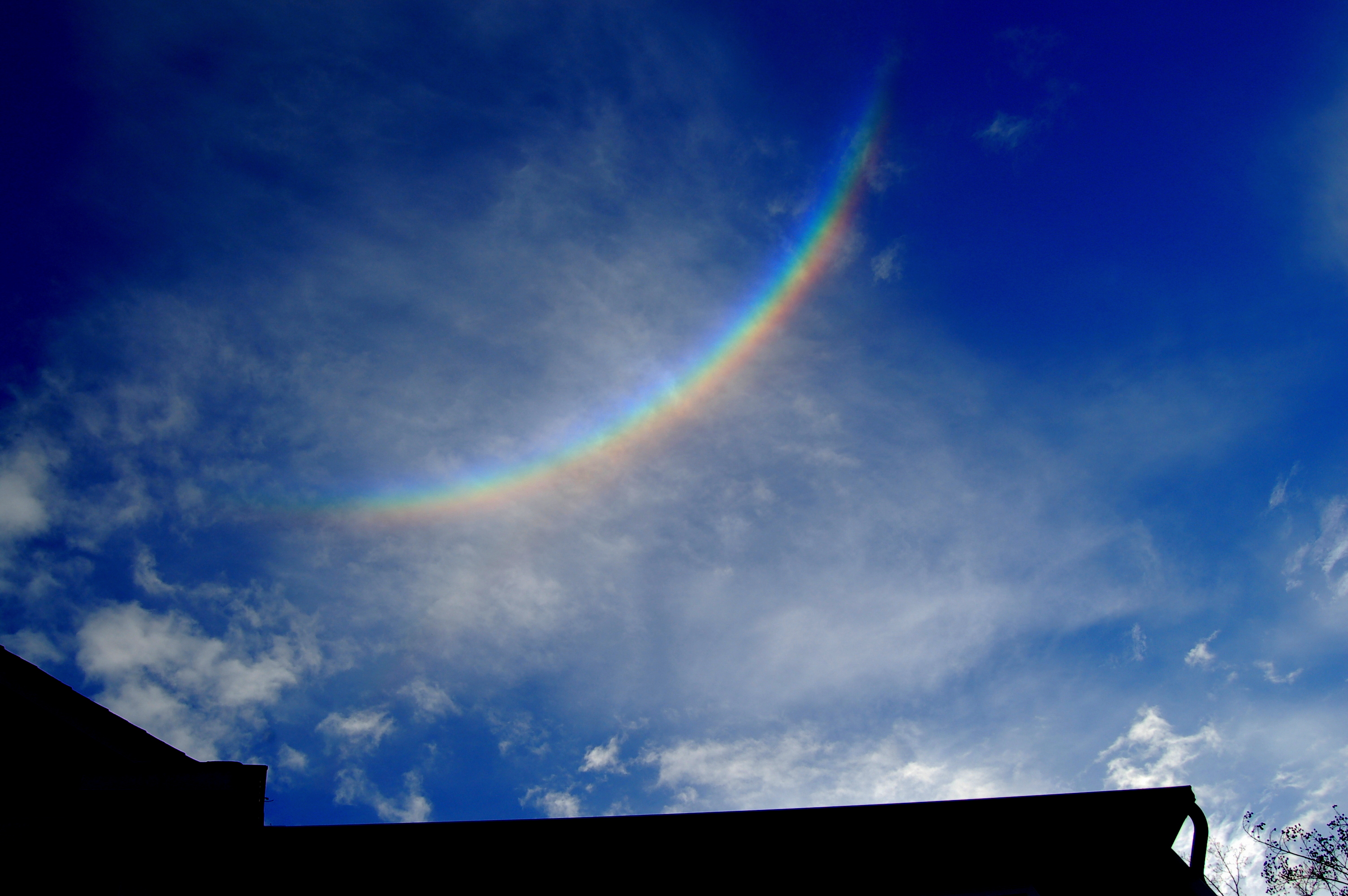
An impressive circumzenithal arc over the Queen City. Not a rainbow, but it does form from similar physics. In this case, this forms from sunlight refracting through ice crystals rather than raindrops, and it’s one of the sub-topics of this course!
Prerequisite: Atmospheric Thermodynamics (METR 3210) with grade of C or above, or permission of instructor.
Description: The primary topics include atmospheric optics, warm and cold cloud microphysics, atmospheric electricity, and remote sensing of cloud properties. We study paths that are a part of the daily life of each and every one of us. Henry David Thoreau said: Such fantastic feathery scrawls of gauze-like vapor on the elysian ground! I go forth each afternoon and look into the west a quarter of an hour before sunset, with fresh curiosity, to see what new picture will be painted there, what new panorama exhibited, what new dissolving views. Every day a new picture is painted and framed, held up for half an hour, in such lights as the Great Artist chooses, and then withdrawn, and the curtain falls. The sky is the best and most accessible arena on Earth to think about physics!
Objectives
1. Understand the physics leading to clouds, precipitation, and lightning
2. Learn how to infer properties of our atmosphere and clouds from their interactions with electromagnetic radiation
3. Connect classroom/textbook physics with your own observations of the atmosphere
The image below shows the edge of space confining the amazing clouds that define our planet, as photographed by an astronaut from the International Space Station. Ground control to Major Tom?
